
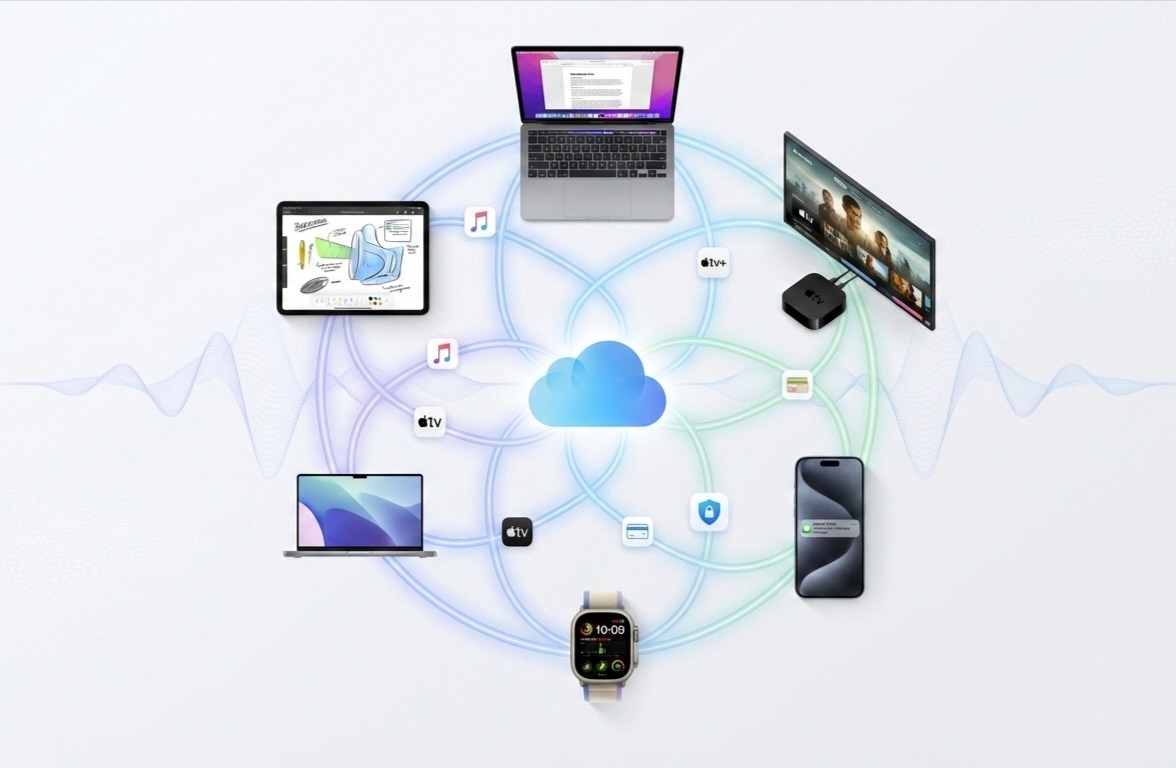
Apple has never positioned itself as just a device company. Over time, it has built something far more connected and deliberate. Its products, software, and services are designed to work together in a way that feels natural to the user. This is not about flashy features or short-term trends. It is about reducing friction in everyday digital tasks. Understanding how this system works helps explain why so many users stay within it for years.
At its core, the Apple Ecosystem is about continuity. Devices are not meant to stand alone. Each one plays a role in a larger flow that connects work, communication, storage, security, and entertainment. The value becomes clearer the longer someone uses multiple Apple products together.
The Foundation: Devices That Share a Common Language
Apple’s hardware lineup is broad but tightly aligned. iPhone, Mac, iPad, Apple Watch, and Apple TV are built with shared design principles and compatible software layers. This allows them to communicate with each other without complicated setup.
For example, starting a task on one device and finishing it on another feels normal. A document opened on a Mac can be picked up on an iPad without manual transfers. Messages and calls appear across devices automatically. Photos taken on an iPhone show up on a Mac within moments.
This level of coordination is not accidental. It comes from Apple controlling both hardware and software. Because the company designs the operating systems alongside the devices, it can optimize how they interact. The result is consistency. Users do not need to relearn behaviors when switching devices.
Software as the Connecting Layer
Operating systems are the real glue. iOS, macOS, iPadOS, watchOS, and tvOS share common frameworks. While each system is tailored to its device, they follow similar logic and design rules.
Features like Handoff, Universal Clipboard, and AirDrop are simple examples. They are not complex tools, but they save time. Copying text on one device and pasting it on another feels small, yet it changes how people work. File sharing without cables or third-party apps removes friction.
This shared software approach also improves stability. Updates roll out in a coordinated way. Security patches arrive across platforms at the same time. Users do not have to worry about compatibility gaps between devices.
iCloud and the Role of Centralized Data
Cloud services play a quiet but critical role. iCloud acts as a central hub for files, photos, backups, and settings. It is not meant to be a productivity tool on its own. Its value comes from how it stays out of the way.
When a user signs into a new device, their data follows. Contacts, calendars, passwords, and preferences appear automatically. This reduces setup time and lowers the risk of data loss.
iCloud also supports continuity features. Notes sync across devices. Safari tabs stay aligned. Even system settings are shared. Over time, this creates a sense of stability. Devices feel replaceable because data is not locked to a single machine.
This cloud-first approach strengthens the Apple Ecosystem by making transitions smooth rather than disruptive.
Services That Extend Daily Use
Beyond hardware and core software, Apple has expanded into services that support everyday habits. These services are not mandatory, but they deepen integration.
Apple Music connects listening history across devices. Apple TV+ ties viewing progress to the user account rather than the screen. Apple Pay works across iPhone, Apple Watch, and the web with the same credentials.
What matters is not the individual service. It is the shared identity behind them. One account connects payments, subscriptions, and usage patterns. This reduces friction and simplifies management.
From a user perspective, services feel like extensions of the device rather than separate products. That distinction matters.
Privacy and Security as Structural Elements
Security is often discussed as a feature, but in Apple’s case, it is part of the structure. Device encryption, secure enclaves, and on-device processing are built into the system from the start.
Data sharing between devices happens within controlled environments. End-to-end encryption protects sensitive information like messages and health data. Biometric authentication replaces passwords in many situations.
This approach influences trust. Users are more willing to store personal data when systems feel predictable and controlled. Over time, this trust becomes part of the ecosystem’s value.
The Apple Ecosystem benefits from this because security is consistent. Users do not have to evaluate each device separately.
ALSO READ: Shocking Apple Secrets Revealed on digitalrgs everything apple
The Role of Apps and Developers
Third-party apps are essential to long-term relevance. Apple provides developers with frameworks that allow apps to run across devices with minimal changes. A productivity app can exist on iPhone, iPad, and Mac while sharing data and interface logic.
This consistency encourages app loyalty. Users expect their favorite tools to behave similarly across screens. Developers benefit from predictable design standards and shared APIs.
From an ecosystem perspective, this creates balance. Apple controls the platform, but developers fill it with useful tools. The system grows without fragmenting.
Hardware Design and Long-Term Use
Apple’s hardware design choices also support ecosystem thinking. Materials, ports, and accessories follow shared standards. Chargers, keyboards, and headphones often work across multiple devices.
Longevity matters here. Devices receive software updates for many years. Older hardware remains functional within the system. This reduces churn and supports gradual upgrades rather than forced replacements.
Users can add devices over time instead of replacing everything at once. That flexibility strengthens long-term adoption.
Interoperability Without Complexity
One reason users value this setup is that it avoids visible complexity. Many connected systems rely on settings, permissions, and manual pairing. Apple hides much of that behind defaults.
Bluetooth pairing is simplified. Wi-Fi credentials sync automatically. Accessories connect with minimal steps. This lowers the learning curve, especially for non-technical users.
The Apple Ecosystem succeeds here by prioritizing predictable behavior over customization depth. Some users want full control. Others want things to work without thinking. Apple clearly targets the second group.
Limitations and Trade-Offs
No system is without trade-offs. Tight integration can limit flexibility. Customization options are narrower than on more open platforms. Users who prefer deep system control may feel constrained.
Interoperability with non-Apple devices exists but is not always seamless. Some features work best when all devices are within the same family. This can create friction for mixed-device households.
These limitations are part of the design choice. Apple prioritizes consistency over openness. Understanding this helps set realistic expectations.
Why the Ecosystem Model Persists
Despite trade-offs, the model continues to attract users. The value compounds over time. Each additional device increases convenience rather than complexity.
This is why the Apple Ecosystem remains relevant today. It is not about individual products being better in isolation. It is about how they work together over years of use.
The system rewards familiarity. Once habits form, switching costs rise, not because of lock-in alone, but because alternatives feel less predictable.
A Broader View of Digital Integration
From a broader perspective, Apple’s approach reflects a larger trend. Users prefer environments where tools align rather than compete. They want fewer accounts, fewer settings, and fewer interruptions.
Other technology companies attempt similar strategies, but execution varies. Apple’s strength lies in vertical integration and long-term consistency.
The Apple Ecosystem demonstrates how design, software, services, and security can align under a single vision without constant reinvention.
Final Thoughts
Understanding this system requires looking beyond devices. It is about how everyday digital actions connect. Communication, work, storage, and entertainment flow through a shared framework.
The Apple Ecosystem is not built for everyone. It favors simplicity over customization and consistency over experimentation. For many users, that balance feels right.
From an industry standpoint, it remains one of the clearest examples of ecosystem-driven product strategy. Its success lies in restraint as much as innovation.